
A cold line of air along the sofa, curtains that move when the furnace kicks on, or a room that never seems to warm up are not small annoyances in a Colorado winter. They are signs that your home’s exterior envelope is not doing its job. Learning how to stop window drafts starts with identifying where air is entering and whether a simple repair will hold up or replacement is the more dependable answer.
Denver-area homes handle sharp temperature swings, intense sun, wind, snow, and dry conditions throughout the year. A window that looks fine from across the room may still have worn seals, loose hardware, failed insulation around the frame, or aging glass that leaves your home less comfortable and more expensive to heat and cool.
Find the Source of the Draft Before You Fix It
Not every cold spot near a window is an actual air leak. Glass naturally feels colder than an insulated wall during winter, especially on older single-pane windows. That sensation can make a room uncomfortable, but it calls for a different solution than a gap that allows outdoor air inside.
On a windy day, slowly move your hand around the edges of the sash, where the moving part of the window meets the frame. Check the lower corners, meeting rails, lock area, and trim. You can also hold a thin tissue near those areas. Movement may indicate air infiltration. Do not use an open flame for this test.
Look for visible clues as well. Cracked or flattened weatherstripping, daylight around the sash, loose interior trim, condensation between glass panes, difficulty locking the window, and deteriorated exterior caulk all point to a potential problem. If the draft seems to come from the wall around the window rather than the operating portions, the installation area may need attention.
A quick inspection matters because sealing the wrong spot can waste time and hide a larger issue. For example, caulking a window shut may reduce air movement temporarily, but it can also interfere with drainage, operation, and ventilation if it is applied in the wrong place.
How to Stop Window Drafts With Simple Seasonal Fixes
When the window frame and glass are in generally good condition, a few targeted repairs can improve comfort. Start with the least invasive solution and reevaluate once the next cold or windy day arrives.
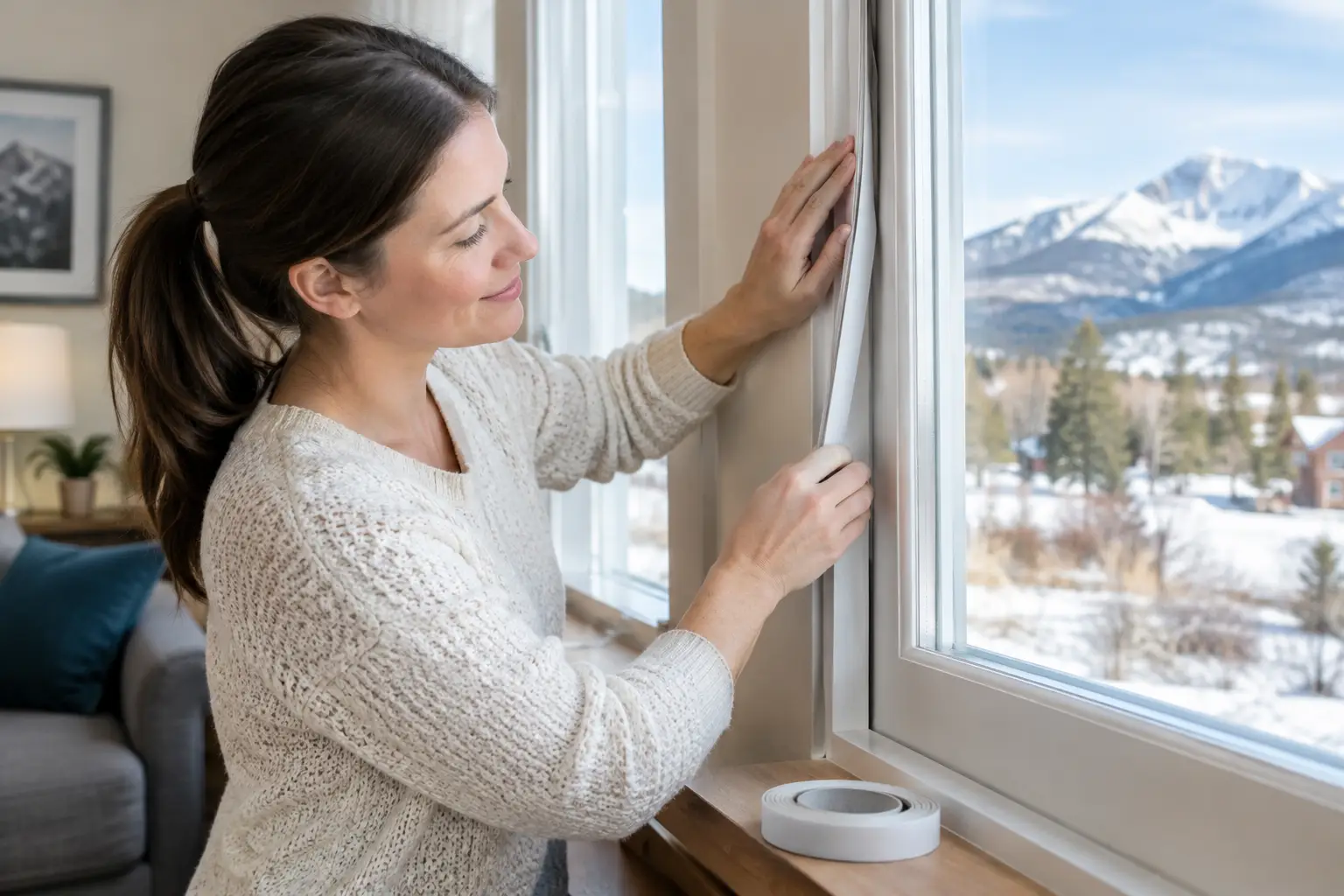
Replace worn weatherstripping
Weatherstripping creates a compressible seal between the sash and frame. Over time, it can harden, tear, flatten, or pull away. Replace it with a product designed for your particular window style, whether it is a double-hung, casement, sliding, or awning window.
The fit is as important as the material. Weatherstripping that is too thin will not seal. Material that is too thick can make a window difficult to close and may strain the hardware. Before applying new strips, remove old adhesive and clean the contact surface so the new seal bonds properly.
Re-caulk exterior gaps carefully
Exterior caulk can fail after years of Colorado sun, expansion and contraction, and moisture exposure. Inspect the joint between the window frame or exterior trim and the siding, brick, stucco, or other cladding. Cracks and separations can allow wind and water to reach the opening around the unit.
Remove loose, failed caulk before applying a high-quality exterior sealant compatible with the surrounding materials. The goal is a continuous, flexible seal – not a thick bead spread over damaged material. If there are large gaps, damaged trim, rot, or signs of water intrusion, it is better to have the area evaluated than simply cover it with caulk.
Tighten locks and adjust hardware
A window lock does more than provide security. On many styles, it also draws the sash tighter against its weatherstripping. If a double-hung window will not lock easily, if a casement window does not pull snugly into the frame, or if the sash sits unevenly, the hardware may need adjustment.
Check for loose screws, debris in tracks, or worn components. Basic cleaning and adjustment can help a relatively new window seal correctly. However, repeated alignment problems often point to a warped sash, damaged frame, or worn balance system that a simple adjustment will not solve.
Use interior window film as a temporary measure
Clear shrink-film kits can reduce heat loss and noticeable drafts during a single heating season. They are most useful for older windows that you plan to replace later, or for rooms where a near-term replacement project is not practical.
Window film does have trade-offs. It can limit access to the window, make cleaning more difficult, and does not repair failed seals or deteriorated frames. Think of it as a temporary comfort measure, not a permanent window solution.
Check the Area Around the Window Frame
A draft may come from the gap between the rough opening in the wall and the window frame. This is especially common in older homes, homes with prior installation work of uncertain quality, or windows that have shifted over time.
Interior trim can conceal this problem. If you feel air at the casing or notice staining, cracking drywall, or trim that has pulled away from the wall, there may be insufficient insulation or air sealing around the opening. Addressing it usually requires removing trim and inspecting the perimeter carefully.
This is one reason installation quality matters so much with replacement windows. A high-performance window cannot reach its intended efficiency if it is not properly fitted, insulated, flashed, and sealed into the home. The product and the workmanship need to work together.
When Drafty Windows Should Be Replaced
Repairs make sense when the window is structurally sound and the problem is isolated. Replacement becomes the more practical investment when drafts are part of broader aging or performance issues.
Consider a professional replacement evaluation if you notice several of these conditions:
- Drafts return soon after weatherstripping or caulking repairs.
- The frame is rotted, soft, warped, cracked, or visibly deteriorated.
- Double-pane glass is fogged or cloudy between the panes, indicating a failed insulated glass seal.
- Windows are difficult to open, close, lock, or keep in position.
- Condensation forms frequently on interior glass despite reasonable indoor humidity.
- Multiple rooms are uncomfortable, noisy, or costly to heat and cool.
Older aluminum windows and aging wood windows are frequent sources of air leakage, though age alone does not determine whether replacement is necessary. A careful inspection should consider the frame condition, glass performance, operation, existing installation, and your plans for the home.
For many Colorado homeowners, whole-home replacement is worth considering when multiple windows are failing at once. It provides a consistent appearance and performance level across the home, while allowing the installation team to address each opening correctly. In other cases, replacing the worst-performing windows first may be the right path. The best approach depends on budget, condition, and priorities, not a one-size-fits-all recommendation.
Choose Replacement Windows Built for Colorado Conditions
If replacement is the right answer, focus on more than the glass package. Energy efficiency begins with a well-built frame, tight weatherstripping, insulated glass, and a configuration that fits how you use the room.
For Colorado homes, low-emissivity glass can help manage heat transfer while allowing useful natural light. Insulated glass units with appropriate gas fills, quality spacers, and durable seals can improve winter comfort and help reduce excessive summer heat gain. The ideal glass package can vary by window orientation. West-facing windows often need different solar control considerations than shaded north-facing openings.
Window style affects draft resistance and daily use, too. Casement and awning windows typically close against compression seals, which can create a very tight fit when properly maintained. Double-hung windows offer familiar operation and can provide useful ventilation. Sliding windows may suit certain openings, but they rely on well-designed tracks and weatherstripping to perform at their best. There is no single best style for every room.
A custom replacement window should also fit the opening precisely. Proper measuring, careful preparation, insulation around the frame, exterior weather protection, and final adjustments are central to long-term performance. Premium products deserve dependable craftsmanship during installation.
Do Not Overlook Doors and Other Air Leaks
A drafty room may have more than one source. Exterior doors, sliding patio doors, attic penetrations, recessed lighting, fireplace dampers, and poorly insulated walls can all contribute to the same cold-air feeling.
Before assuming every problem is a window problem, note when and where you feel the draft. Air near the floor by a patio door, for example, may be caused by a worn door sweep or damaged threshold. Cold air at the top of a window could indicate a gap behind trim. A no-pressure consultation should help clarify those distinctions rather than push a solution that does not match the issue.
For Denver and Colorado homeowners who are ready to move beyond temporary fixes, Veteran Windows and Doors can help evaluate aging windows, select climate-ready replacement options, and complete the work with skilled installation. The right improvement should leave your rooms quieter, more comfortable, and easier to enjoy when the weather changes outside.

0 Comments