
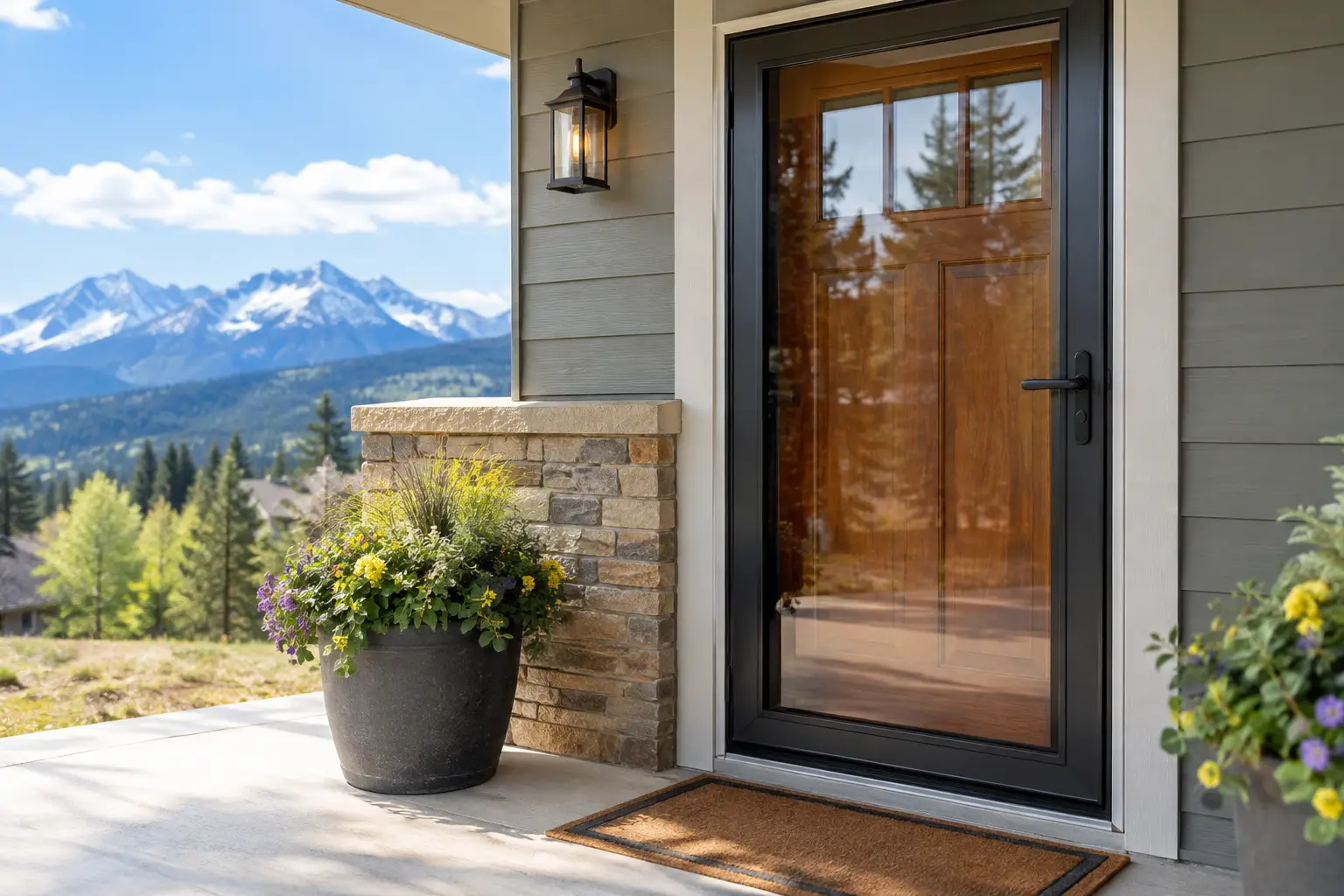
A front door in Colorado has a demanding job. It may face intense high-altitude sun in the afternoon, blowing snow overnight, and a sharp temperature change before the next morning. The storm door benefits Colorado homes most when it is treated as a practical part of the home’s exterior envelope, not just an extra layer of glass in front of the entry door.
A properly selected and professionally installed storm door can protect an entry door, improve day-to-day comfort near the entrance, add controlled ventilation, and provide another level of security. The right choice depends on the direction your entry faces, the condition of your existing door and frame, and how your household uses the space.
Storm Door Benefits for Colorado Homes
A storm door is installed on the exterior side of an entry door. Most styles include a glass panel, screen panel, or retractable screen system within an aluminum frame. Its purpose is straightforward: create a protective buffer between the weather and the primary entry door.
That buffer matters in Denver and across Colorado, where a home can experience strong sun, dry wind, hail, snow, and sudden temperature shifts in the same season. A quality storm door will not replace a worn or poorly insulated entry door. It can, however, help a sound entry door perform better and last longer.
Protection from sun, wind, and moisture
Colorado’s elevation brings powerful ultraviolet exposure. Over time, direct sun can fade paint, dull stains, and wear down finishes on a wood or fiberglass entry door. A full-view storm door with appropriate glass helps shield the primary door from that daily exposure while still allowing natural light into the entry.
Wind-driven rain and snow are also hard on a door’s finish, sill area, weatherstripping, and hardware. A storm door reduces the direct impact of that moisture. This is especially useful on exposed front entrances, homes near open spaces, and doors that face prevailing winds.
Protection does have limits. If water is getting behind trim, the threshold is damaged, or the primary door is warped, a storm door is not the repair. Those conditions should be addressed first so the new unit has a stable, properly sealed opening.
A more comfortable entry area
A storm door adds a pocket of air between itself and the entry door. That extra layer can reduce the feeling of cold radiating through the doorway during winter and help limit drafts caused by wind pressure. Homeowners often notice the difference most in a foyer, mudroom, or entry hall that previously felt chilly on cold days.
The overall energy impact depends on the entire opening. A modern, insulated fiberglass or steel entry door with fresh weatherstripping will make a larger difference than a storm door placed over an aging, leaky door. Still, pairing a high-quality entry door with a well-fitted storm door can be a sensible approach for homeowners who want added protection and comfort.
Good installation is central to the result. The frame must be square, the sweep must contact the sill correctly, and the door closer must be adjusted so the door latches without slamming. Small details determine whether the door blocks weather effectively or becomes another source of rattling and air leakage.
Fresh air without leaving the entry open
Colorado’s cool mornings and low humidity make natural ventilation appealing through much of the year. A storm door with a built-in retractable screen or interchangeable screen panel lets homeowners open the main door while keeping insects, leaves, and debris outside.
This can be particularly helpful after cooking, during spring and fall, or when a home needs a little more airflow without running the cooling system. A retractable screen keeps the view clear when it is not in use, while a removable screen can be a durable, straightforward option for many households.
Ventilation should be used thoughtfully in changing weather. On a windy day, an unsecured main door can pull the storm door hard against its closer. During a sudden summer storm, homeowners should close both doors promptly to protect interior flooring and finishes from blown rain.
Added security and peace of mind
A storm door creates a second closed barrier at the entrance. That can give homeowners more time and visibility when answering the door, receiving a package, or speaking with a visitor. Models with heavy-duty frames, reinforced corners, strong hinges, and quality locking hardware offer more meaningful security than lightweight, builder-grade doors.
A storm door is not a substitute for a secure primary entry door and a properly functioning deadbolt. The strongest setup begins with a solid entry door, a reinforced strike area, and hardware installed into the framing rather than only the trim. The storm door then adds another layer of control and deterrence.
For households that want an even higher level of protection, a purpose-built security door may be a better fit than a standard storm door. The right recommendation depends on the home’s location, the homeowner’s priorities, and whether visibility, airflow, or maximum strength is the primary goal.
Choosing a Storm Door for Colorado Weather
The best storm door is not always the heaviest glass door or the most decorative option. It should fit the entry, complement the home, and hold up to local conditions. Aluminum frames are popular because they resist corrosion and require relatively little maintenance. Full-view styles maximize light and showcase the primary door, while mid-view and high-view styles provide more solid panel area and a more traditional appearance.
Glass selection deserves careful attention on south- and west-facing entrances. Direct afternoon sun can create heat between the storm door and primary door. That heat may be hard on certain finishes, especially on dark-colored doors exposed for long periods. A knowledgeable installer can help assess the entry’s orientation and recommend a design that provides protection without creating avoidable heat buildup.
Color, hardware finish, mullions, and decorative glass can also change the look of the front elevation. A storm door should feel intentional, not like an afterthought. When it coordinates with the entry door, exterior lighting, and trim, it can add polish while preserving the character of the home.
Installation Details That Protect the Investment
Storm doors are custom-fit products, not one-size-fits-all accessories. Before installation, the opening should be measured carefully and checked for out-of-square conditions, damaged brickmold, loose trim, and threshold problems. The installer also needs to confirm that the door swing will not interfere with a railing, step, wall, or exterior fixture.
The closer placement matters as well. A storm door needs enough room to open and close safely, and it should not strike the main door handle or scrape the siding. If the existing entry door swings outward, a conventional storm door may not be appropriate at all. This is one reason an honest, no-pressure consultation is more valuable than selecting a door based on appearance alone.
At Veteran Windows and Doors, skilled installers help homeowners evaluate the complete opening before recommending a custom storm door or another entry-door solution. That approach supports dependable craftsmanship and helps avoid surprises once installation day arrives.
When a Storm Door May Not Be the Best Choice
A storm door is not necessary for every home. If a front entry is deeply covered by a porch, faces minimal weather exposure, and already has a new high-performance door, the practical return may be limited. Some homeowners also prefer the clean look of a single entry door without a second frame or closer in view.
In other cases, a replacement entry door, new weatherstripping, threshold repair, or a security door may solve the real problem more directly. The right project starts with identifying whether the concern is drafts, appearance, sun exposure, ventilation, or security.
A well-chosen storm door should make the entrance easier to live with through Colorado’s changing seasons. When the fit, glass, hardware, and installation are right, it protects the door you already value while giving your home a more comfortable and welcoming front entry.

0 Comments